
Nowadays, we think acidity, bloating, reflux, and indigestion are normal parts of daily life. We rush through meals at our desks, swallow our food half-chewed, and handle stressful workloads all at once. As a result, pills, medications, and antacids have become permanent staples in our first-aid boxes, purses, and desk drawers, we pop them like candy at the first hint of discomfort. But just because something is common doesn’t mean it is normal.
Your body isn’t designed to live in constant digestive distress or rely on a daily pill to process a basic meal. When that familiar burn or bloating appears, your first instinct may be to assume your stomach is overflowing with a volcano of acid. But what if the reality is the exact opposite? What if your discomfort is actually a desperate cry for more stomach acid?
In this article, I’ll help you understand why low stomach acid can be an overlooked cause of digestive symptoms, how it affects digestion and nutrient absorption, and a simple way to test your stomach acid at home.
The Real Reason You Get Reflux
To understand why digestive symptoms can occur, we first need to understand the physiology of stomach acid and how it supports digestion. At the junction between your esophagus and stomach is a ring of muscle called the lower esophageal sphincter (LES). It acts as a barrier, opening to allow food into the stomach and helping prevent stomach contents from flowing back into the esophagus. Digestion begins long before food hits your mouth. It starts in the brain through the “cephalic phase” of digestion. When you look at, smell, and anticipate food in a relaxed state, your brain signals your stomach to pump out stomach acid.
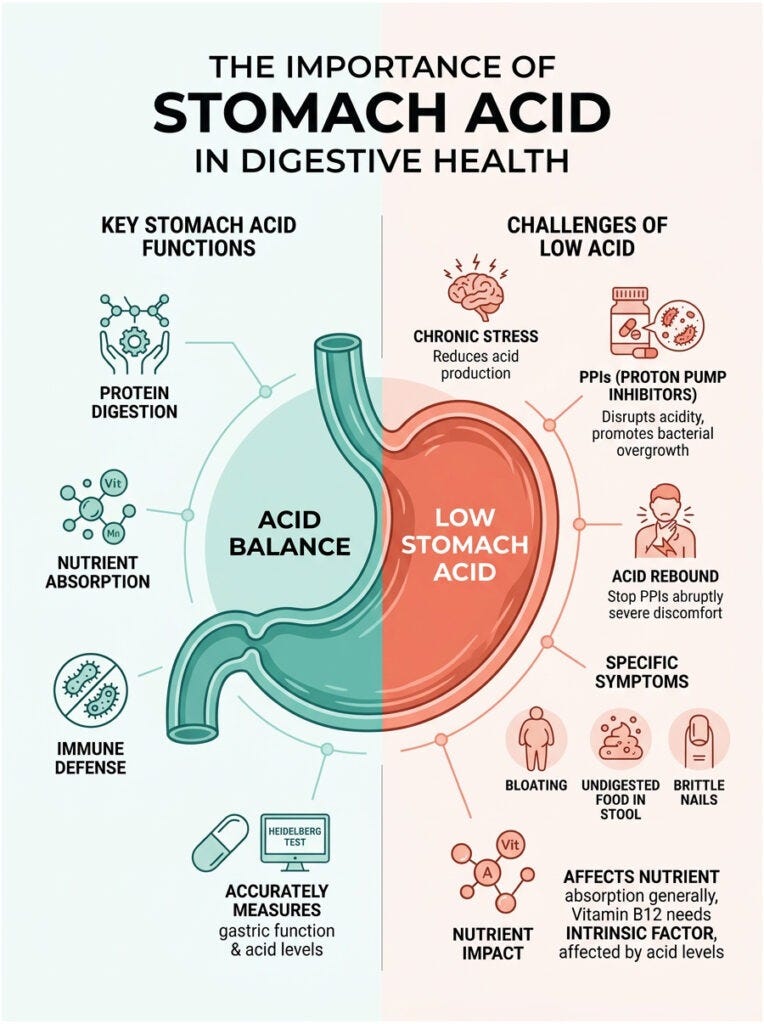
This phase prepares the stomach for food by stimulating gastric secretions, including HCL and digestive enzymes. Adequate stomach acid is very important for protein digestion and nutrient absorption. If it’s too low, pepsin activation becomes less efficient, contributing to symptoms such as fullness, bloating, and indigestion. It can also lead to iron, b12, calcium & zinc deficiency.
When you eat quickly, don’t chew properly, or eat while distracted or stressed, your body stays stuck in “fight-or-flight” mode and the brain fails to send the necessary signals to your gut. Consequently, your gastric juice secretion plummets, leading directly to dangerously low stomach acid.
Stomach acid is the exact chemical trigger that tells the LES valve to lock shut. Hence the valve stays lazy, weak, and wide open. Because that physical gate remains open, unchewed food sits in the stomach and ferments. This physical pressure builds up like a shaken soda bottle and literally forces the LES valve to stretch open mechanically, letting acid splash upward.
How Conventional Antacids Ruin Gut Health & lead to Nutrient Deficiencies –
Once the LES (lower esophageal sphincter) opens, you start experiencing recurring acid-reflux symptoms, it’s natural for you to reach for an antacid as the ultimate solution. But conventional antacids have essentially one job- neutralize and suppress stomach acid. And this is where things go on toss. A healthy stomach is naturally highly acidic, with a pH typically around 1–3, and this acidity helps in controlling the pathogens that enter and survive in the digestive tract. When you take antacids, it significantly raises gastric pH to 5–7, making it alkaline. This allows a greater number of surviving bad bacteria to pass through the large intestine and reach the small intestine, where they can feed on undigested food, multiply in number and ferment the food. When bacteria begin accumulating in the small intestine where they should not be present in such high numbers, this can contribute to SIBO (Small Intestinal Bacterial Overgrowth).
At the same time, changes in the normal microbial environment can disrupt the balance between good and bad bacteria in the large intestine, contributing to Gut Dysbiosis. And now, instead of dealing with just reflux or acidity, a person starts experiencing another set of problems like indigestion, bloating, gas and constipation. And the impact doesn’t stop there. Vital vitamins and minerals such as iron, calcium, B12, magnesium and zinc rely on an acidic gastric environment for proper bioavailability, so prolonged acid suppression interferes with their absorption, leading to nutrient deficiencies
How to Spot Low Stomach Acid
The Baking Soda Test
-
Step 1: First thing in the morning on an empty stomach, mix ¼ teaspoon of baking soda into 120ml of room-temperature water.
-
Step 2: Drink the mixture quickly & immediately start a timer on your phone.
-
Step 3: Note how long it takes to burp, you should experience a distinct, healthy burp within two to three minutes. If it takes longer than three to five minutes, or if you don’t burp at all, it means your stomach acid is dangerously low
Rebuilding the Valve, Not Suppressing the Symptoms
My approach focuses on fixing the valve function naturally and restoring your body’s innate digestive fire that has been ruined by antacids. Here is my actionable, food-support protocol to heal the system from the inside out:
Step 1 – Restore The Digestion
When it comes to fixing the digestive environment, I believe in removing the digestive load first. I believe in taking away what is not serving your gut at this moment, so it gets some space to settle and recover. So, I start by temporarily eliminating gluten, dairy, heavy legumes and pulses, highly spicy foods, and even raw vegetables. Why? Gluten and dairy are removed because, in people who are sensitive to them, they can aggravate gut irritation. Heavy legumes and pulses contain compounds such as phytates and can be harder to digest, contributing to gas and bloating. Similarly, large amounts of raw vegetables bring in a higher fiber load, which can feel difficult to handle when the digestive system is already irritated. So, for the time being, I prefer to simplify things and reduce anything that may further aggravate the gut.
Once the digestive load is out, we slowly move towards creating a better digestive environment. I like to include simple digestive herbs such as ginger, coriander, fennel (saunf) and ajwain to support digestion and make meals easier on the gut. Ginger, in particular, has been one of my go-to herbs because of its digestive and gastric-motility-supporting properties. I also add 1 tablespoon of ACV with the mother, diluted in water, around 20 minutes before meals, as an additional support for what I like to call the body’s digestive fire, as long as it suits the individual and does not worsen their gut issues. For a time being I include boiled or steamed vegetables instead of raw vegetables, because when the gut is already struggling, a very high fiber load increases fermentation, irritation and digestive pressure. A low-FODMAP approach, especially when someone has been regularly using antacids or acidity medications is very effective, so I ensure those guidelines.
Step 2 – Strategic Hydration Timing
Water is vital, but timing is everything. Avoid chugging massive glasses of ice-cold water directly during your meals, as this dilutes your precious digestive enzymes. Instead, sip room-temperature water consistently between meals, stopping about 15 minutes before you eat. To further assist the valve, include a warm cup of ajwain, fennel (saunf), or ginger tea, peppermint tea between meals to naturally calm spasms and accelerate stomach emptying.
Step 3 – Targeted supplements
The next step is supporting the gut with right supplementation. I usually look at this from two angles: supporting digestion and fixing the nutrient deficiencies.
-
Betaine HCl is essentially a source of hydrochloric acid. When taken with a meal, it helps recreate the acidic environment needed in the stomach for proper digestion. Adequate stomach acidity helps activate pepsin, the enzyme responsible for breaking down proteins, and supports the release of nutrients such as vitamin B12 from food proteins.
-
Digestive enzymes can help the body break down the meal more efficiently; I prefer taking the enzymes after the first couple of bites so they are present alongside the food being digested.
-
Then I bring in Zinc Carnosine that helps support the mucosal lining and supports the gut’s natural repair. Think of it as giving the gut lining the support it needs to strengthen its protective surface before we focus on rebuilding the microbial environment.
-
Finally, I add Probiotics to support the microbial ecosystem. I focus on specific beneficial strains that can support a healthier microbial balance.
-
And depending on the individual’s symptoms, dietary intake and blood work, nutrients such as vitamin B12, iron, magnesium will also need to be addressed if there is an identified deficiency or increased risk of deficiency
Step 4 – Calm The Nervous System
Your gut and brain are constantly communicating with each other, and one of the major pathways connecting them is the Vagus Nerve. This means what you feel can influence how you digest, how your gut moves and even how comfortable you feel after a meal. That is why, when it comes to healing a person, I look beyond digestion and food, I also work on the nervous system.
-
First thing in the morning, step outside. For the first 15 minutes after waking up, get natural morning light and avoid reaching for your phone or other electronic gadgets. Rather than literally staring at the sun, allow natural daylight to reach your eyes indirectly.
-
If possible, spend the next few minutes walking barefoot on wet grass. This gives you gentle physical movement first thing in the morning and can become a beautiful grounding practice that helps you slow down and reconnect with your body. The movement itself can also support normal intestinal motility and digestion.
-
Before meals, I introduce Box Breathing , slow, controlled breathing with 4 counts for the inhale, hold, exhale and hold. This gives you a moment to pause, become aware of your breath and shift your attention towards the meal instead of eating in a rushed or distracted state.
-
Aim to chew every single bite 20 to 30 times until it reaches a liquid consistency. This mechanical breakdown naturally stimulates your body’s own production of gastric juices & takes the heavy lifting off your stomach.
-
You can then incorporate pranayama and Bhramari into your daily routine. These breathing practices encourage slower, more mindful breathing and can help promote a calmer nervous-system state, which is important because digestion works best when the body is not constantly operating in a heightened stress response.
-
And finally, 4-7-8 breathing can be used whenever you need to slow down especially towards the evening or before sleep. The goal isn’t to add another complicated task to your day. It is simply to teach your body that it is safe to slow down, digest and recover.
The Bottomline
True digestive freedom doesn’t come from suppressing your stomach’s natural functions with a pill, it comes from supporting its mechanics with intentional, daily practices through lifestyle and nutrition. By prioritizing how you eat and what you feed your gut, you can train that lazy esophageal valve to close tightly, protect your tissues, and process your food effortlessly.
Let’s chat in the comments below, tell me your biggest symptom trigger, and let’s rebuild your gut together.