
I have a feeling I know what your day looks like. And if I had to guess, the last two or three months probably haven’t looked very different either. You wake up, reach for your phone, scroll through the news, and suddenly realize you’re already running late for work. You rush through breakfast while thinking about that boss who makes your life unnecessarily difficult. Then comes the traffic, hours of work, endless deadlines, and somewhere in between, a call from your child’s school that needs your attention. By the time, day ends, you’re mentally exhausted, physically drained, and left with very little energy for yourself. So, you push through, you decide to meet your friends in the evening, hoping to unwind a little. But as everyone starts sharing their day, you realize their lives are exactly the same as yours.
And, somewhere in that conversation, we just accept that stress is just a normal part of being an adult. That everyone is struggling, everyone is exhausted, and perhaps this is simply how we have to live with it. But I always say just because something is common doesn’t mean it’s normal, or that your body is meant to live with it every single day. Constant stress doesn’t just leave you feeling tired. Over time, it can affect your sleep, mood, energy, and ability to cope with everyday challenges
But, we can’t always control what’s happening around us, rather what we can do is learn to respond to stress differently, give our body the support it needs, and create small pockets of calmness even when life feels overwhelming.
So, let’s talk about some simple, practical ways to lower your stress levels not by asking you to change your entire life overnight, but by helping you start with the one thing you can begin to influence today, how you care for yourself.
What is Cortisol? How it Affects Your Health?
Before we talk about ways to lower your stress levels, let’s understand what’s happening inside your body when you’re stressed. And one hormone that plays a major role in this process is Cortisol.
Cortisol is a hormone produced by your adrenal glands, which sit right on top of your kidneys. It helps your body respond to stress, regulate metabolism, maintain blood pressure, and manage your sleep-wake cycle. Your cortisol levels naturally peak in the early morning. This helps you wake up, feel alert, and get ready to take on the day. Another job of cortisol is helping you respond when something stressful happens. Stress is of two types- Acute stress & Chronic stress. Acute stress is short-term stress, situations like accidentally cutting your finger while chopping vegetables, getting a fever, or stuck in traffic, last minute urgent meeting, your body recognizes that something needs attention and activates its stress response. It helps you respond to a challenge, and once the situation passes, your body can begin returning to its normal state.
But when this stress becomes chronic in situations like financial worries, death in family, family responsibilities, and deadlines every single day, sometimes, several times a day
Your body keeps receiving signals that it needs to stay alert. Instead of getting enough time to recover between stressful situations, your stress-response system may remain activated for prolonged periods, disrupting normal cortisol regulation. Your body keeps preparing for the next challenge, even when there’s no immediate physical danger to escape. Over time, chronic stress and prolonged cortisol exposure can influence several systems in your body. One of the first things to take a hit is your digestion and gut health. Why? Because your gut and brain are constantly communicating through a two-way connection called the gut-brain axis, with the vagus nerve acting as a major communication pathway. This is why your appetite changes, digestion slows down or becomes irregular, and in the long run you experience bloating, gas, acidity, constipation, abdominal discomfort or changes in bowel movements.
Over time, it affects the gut barrier, which normally prevents harmful microbes and unwanted substances from easily entering the bloodstream leading to leaky gut, potentially triggering immune responses and inflammation. Prolonged stress can also disrupt the body’s regulation of inflammation and weaken certain immune cells’ ability to fight infections effectively.
High cortisol signals your liver to release more glucose into the bloodstream, even when you’re not physically active. Over time, stress hormones can make your cells less responsive to insulin, making blood sugar regulation more difficult. Combined with poor sleep and changes in appetite, chronic stress may contribute to stronger cravings, weight gain (particularly around the midsection), insulin resistance and an increased risk of type 2 diabetes. Insulin resistance is also commonly associated with PMOS. And the impact doesn’t stop at your gut or blood sugar. Disturbances in gut function can influence brain signalling, mood and cognitive function. Prolonged stress can also affect the hippocampus, a brain region involved in memory and learning, potentially contributing to brain fog, forgetfulness and difficulty concentrating.
What looks like a busy lifestyle can have a much bigger impact than you might imagine. You’re no longer dealing with just a stressful day; you’re dealing with a body that may be finding it harder to recover from one.
5 Types Of Stressors Your Body Responds to
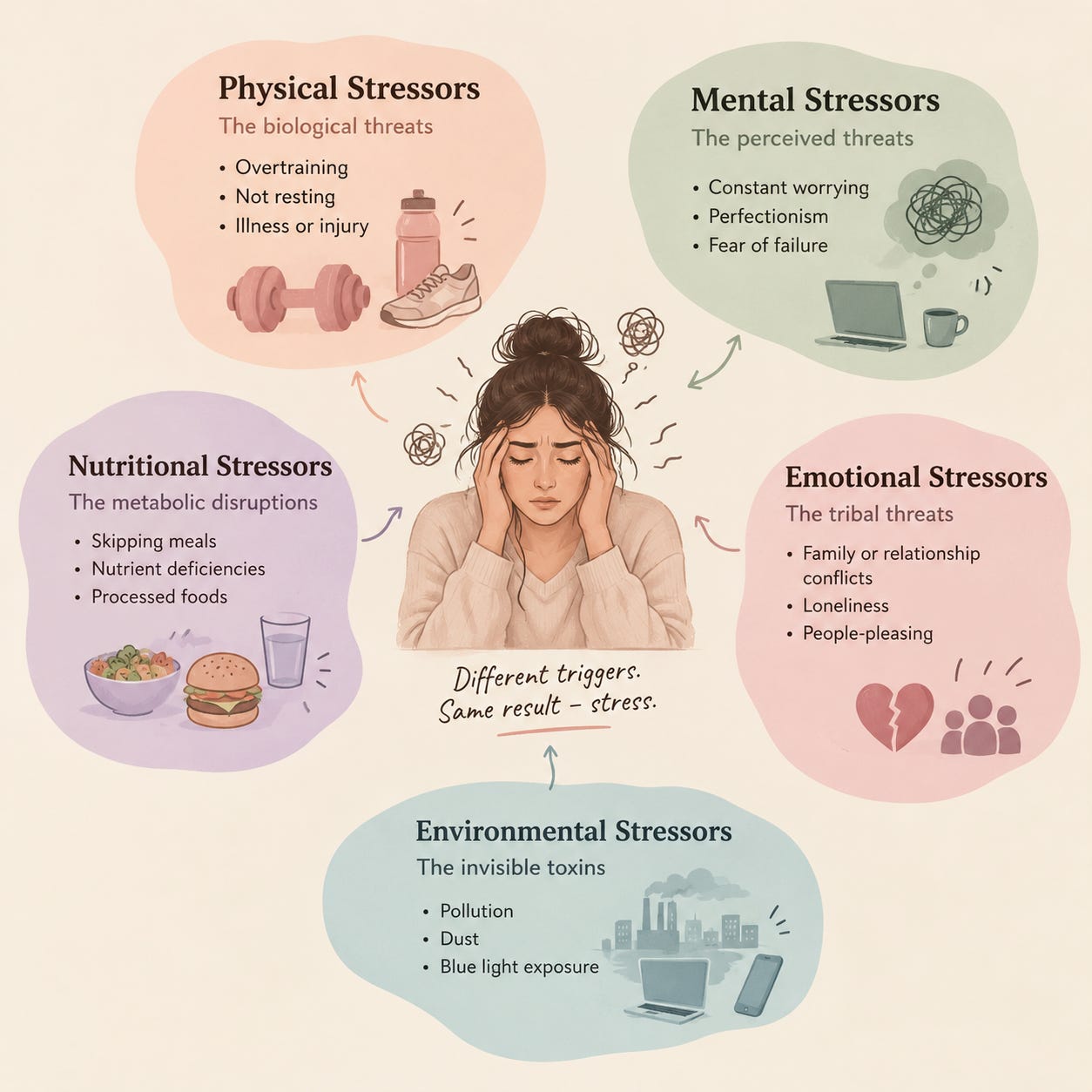
Stress and stressors aren’t the same. Stress is how your body and mind respond to a situation, whereas stressors are the things that trigger that response. They can come from different aspects of your life, including your physical health, thoughts, relationships, food habits and surroundings. Recognising these triggers can help you understand where your stress is coming from. Let’s look at five types of stressors you might be experiencing without even realising it.
1. Physical stressors
Physical stressors are situations where your body has to deal with a physical challenge or threat.
Examples – High fever, injury, meeting with an accident, or pushing yourself through intense workouts without giving your body enough rest. Even an illness or infection can put your body under physical stress as it works to recover.
2. Mental stressors
These are the ones that begin in your mind, often through your thoughts, fears, and constant worrying. Examples – Overthinking a conversation that happened days ago, financial stress or putting yourself under pressure to get everything right.
3. Emotional stressors
Emotional stressors are the situations that take a toll on you emotionally, especially in your relationships and everyday interactions.
Examples – Arguments with your partner or family, office politics, loneliness, and grief can all contribute to emotional stress. And sometimes, it’s people-pleasing, trying to be perfect, suppressing your feelings
4. Nutritional stressors
Nutritional stressors are related to how your eating habits and nutritional status affect your body’s ability to function properly.
Examples – Skipping breakfast because you’re running late, surviving on coffee when you’re exhausted, going long hours without eating, nutrient deficiencies, dehydration can also put additional stress on your body, making it harder to maintain stable energy levels.
5. Environmental/ Chemical stressors
Environmental stressors come from the surroundings you’re exposed to every day, sometimes without even noticing their impact.
Examples – Microplastics, toxic bath and beauty products, polluted air, dust, perfumes with strong fragrances, or scrolling on your phone late into the night
Ways To Regulate Cortisol Levels
1 . Grounding
This technique is believed to help your body shift from constant fight-or-flight mode into a state of rest and relaxation, supporting healthy cortisol levels. The basic science behind it is that the earth’s surface carries a mild negative electrical charge, and when you walk barefoot on grass, soil or sand, your skin comes into direct contact with this electrical potential. Think of it as connecting two surfaces with different electrical potentials: when a connection is made, electrons can move between them. This contact allows electrons to move from the Earth into your body, where they help neutralize free radicals, unstable molecules that contribute to oxidative stress and inflammation. Because of this, grounding has been suggested to support the body’s stress response, circulation and heart rate variability, a measure of how your heart adapts to changing demands.
Actionable Step – Aim to walk barefoot on clean and wet grass for at least 20 mins, preferably on morning
2. Pranayama
Pranayama helps calm your nervous system through slow, deep, conscious breathing that engages your lungs and diaphragm. When you inhale deeply, your diaphragm moves downward, and when you exhale slowly, it moves upward. This slow, conscious and rhythmic breathing of pranayama slows your heart rate, brings you to the present moment, and stimulates the body’s calming pathways. As your body begins to relax, your stress response may settle, helping you feel calmer and more grounded.
Actionable Step – Practice Anuloma villoma/ Bhramari Pranayama/ Box Breathing for at least 20 mins anytime during the day
3. Meditation
Meditation regulates cortisol levels by influencing the brain’s neuroplasticity over time. It helps calm the Default Mode Network (DMN), a network of brain regions that becomes active when you’re daydreaming, imagining or lost in your thoughts. When you’re stressed, this network can keep you caught in a loop of overthinking and worrying, making your brain feel as though something is still wrong. Meditation helps quiet this mental chatter, allowing you to step away from negative thought patterns and build greater hope and resilience to deal with stressful situations.
Actionable Step: When you wake up, practice meditation for a minimum 10 minutes.
4. Take Breathing Breaks
Taking slow, deep breaths into your belly stimulates the vagus nerve, which connects your brain with several organs, including your heart and gut. This helps activate your body’s relaxation response, slowing your heart rate giving your brain a gentle reminder that you can pause, breathe and allow your body to settle. During a hectic schedule, while replying to emails, attending meetings or concentrating on your screen, we tend to sometimes hold our breath or breathe very shallowly without even realizing it. This is often called screen apnea. Taking short breathing breaks throughout your workday can help interrupt this pattern, release built-up tension and give your nervous system a chance to reset.
Actionable Step: Set a reminder every 50 minutes to pause for 5 minutes. Relax your shoulders, breathe gently into your belly, and make each exhale a little slower than your inhale. No forceful breathing, no rushing.
5. Engaging in your Favourite joyful activity
When you engage in an activity you genuinely enjoy or are good at, your brain releases feel-good chemicals such as dopamine, endorphins and serotonin, which help support pleasure, motivation and emotional well-being. These positive experiences can help counter the effects of stress and support a healthier stress response. As you become absorbed in the activity, your attention shifts away from overthinking, worrying and replaying stressful situations, giving your mind a much-needed break.
Research suggests that people who regularly engage in enjoyable leisure activities tend to have better health indicators, including lower blood pressure, smaller waist circumference and lower daily cortisol levels, compared with those who spend less time on such activities.
Actionable Step – Spend at least 3 hours in one of your favorite activity during the week
6. Spending time in Nature
Spending time in nature takes your brain out of constant alert mode and helps your body relax. Our brains and bodies evolved in natural environments, and spending all day indoors surrounded by screens and artificial settings keeps us mentally overstimulated. When you step into a park or forest, natural sights like moving leaves, flowing water and drifting clouds gently capture your attention without exhausting your brain. Psychologists call this soft fascination, which gives your mind a break from constant thinking and worrying.
Actionable Step – Spend 30 minutes in nature without any electronic gadgets around .
7. Prioritizing Sleep
Think of cortisol and melatonin as two best friends sitting on a seesaw. In the morning, cortisol rises to help you feel alert and ready for the day, while melatonin stays low. As evening approaches, cortisol generally declines and melatonin rises, preparing your body for sleep. When you sleep and wake up at a consistent time and aim for around 7–9 hours of quality sleep, you support this natural rhythm, helping your body regulate cortisol and prepare for the next day. Through the gut-brain axis, your gut communicates with your brain via pathways that include the vagus nerve.
Actionable Step – Sleep and wake up at the same time every day, aiming for 8 hours of sleep
8. Reducing Screentime
Screens don’t just strain your eyes; they can also keep your brain constantly stimulated. Short-form content is designed to capture your attention with quick cuts, new information and endless scrolling. Every swipe gives your brain something new to process, making it harder to step away. Instead of getting a mental break, your brain keeps switching its attention from one piece of content to another, leaving little room for stillness. Screens also emit blue light, which can signal to your brain’s internal body clock that it’s still daytime. At night, this can suppress melatonin, making it harder to fall asleep and potentially disrupting your natural cortisol rhythm. Reducing screen time isn’t just about protecting your sleep; it’s also about giving your brain a break from constant stimulation and allowing yourself to be present without needing the next scroll, reel or notification.
Actionable Step: Set aside 30 minutes each day to disconnect from screens. Replace endless scrolling with a real-world activity, such as taking a walk, journaling, talking to a loved one or simply sitting quietly without reaching for your phone.
9. Practice the Art of not doing anything
Doing nothing might sound unproductive, but sometimes, it’s exactly what your brain needs to unwind. Think about it: we’re constantly rushing from one task to another, ticking things off our to-do lists, scrolling through content or finding something new to keep ourselves occupied. Even when we sit down to relax, our brain is still processing information. And when you’re constantly thinking about what needs to be done next, your mind never really gets a break. But when you simply sit by a window, watch the clouds or let your thoughts wander without trying to achieve anything, you give your brain a chance to slow down. You’re no longer chasing the next task or trying to solve the next problem. You’re allowing yourself to be present without feeling the need to be productive every minute. This break from constant mental stimulation helps your nervous system unwind and supports your body’s natural stress response.
Actionable Step – Once a week just spend time with yourself doing nothing
Get Your Nutrition In Check
First things first, simply adding nutritious foods to your diet may not be enough if you’re still consuming foods that are contributing to blood sugar fluctuations, poor sleep or digestive discomfort. The goal is to reduce what’s working against your body while adding the nutrients that support your nervous system, gut and stress response.
Start by reducing refined sugars and highly refined carbohydrates. These foods are digested quickly, often causing a rapid rise in blood sugar. Your pancreas responds by releasing insulin to bring those levels back down. When you’re already under stress, cortisol can signal your liver to release more glucose into the bloodstream, adding to the body’s work of maintaining stable blood sugar. Frequent spikes and fluctuations can leave you feeling tired, foggy or craving more sugar. Reducing added sugars and replacing refined carbohydrates with fiber-rich options may help support steadier energy and better focus over time. Tea, coffee and energy drinks also need to go out of your system, as they are caffeinated drinks. Caffeine blocks adenosine, a chemical messenger that helps your brain recognize tiredness. This can make you feel alert even when your body needs rest, and too much caffeine may worsen anxiety, jitters and sleep disruption.
Another red flag is alcohol; it puts your body under severe physiological stress. It disrupts sleep and your body produces more cortisol while you’re intoxicated. As alcohol wear off, some people experience next-day anxiety, a racing heart or shakiness, particularly after heavy drinking. So remove it entirely.
Include magnesium rich foods like pumpkin seeds, spinach, kale, lentils, 70% dark chocolate as magnesium supports your nervous system and helps calm nerve activity in the brain. Include pumpkin seeds, sesame seeds, chickpeas, lentils and tofu, as zinc supports brain function and helps regulate your body’s stress response. Foods like chia seeds, ground flaxseeds, hemp seeds and walnuts, as omega-3 fats support brain health and normal brain function. Probiotics like kimchi, kombucha, sauerkraut and tempeh to support beneficial gut bacteria and healthy gut-brain communication.
The Bottomline
Stress is a part of life, and while you may not always have control over what happens around you, you can learn to change how your body and mind respond to it. You cannot always silence the chaos outside, but you can learn to create calm within. And that is where healing begins, not by changing everything around you, but by understanding what your body needs and giving it the support it deserves. Because sometimes, the most powerful change begins within you.
If you’ve been feeling confused about your health, overwhelmed by where to start, book a Root-Cause Discovery Call with me to understand the bigger picture & what your body may actually be asking for.