
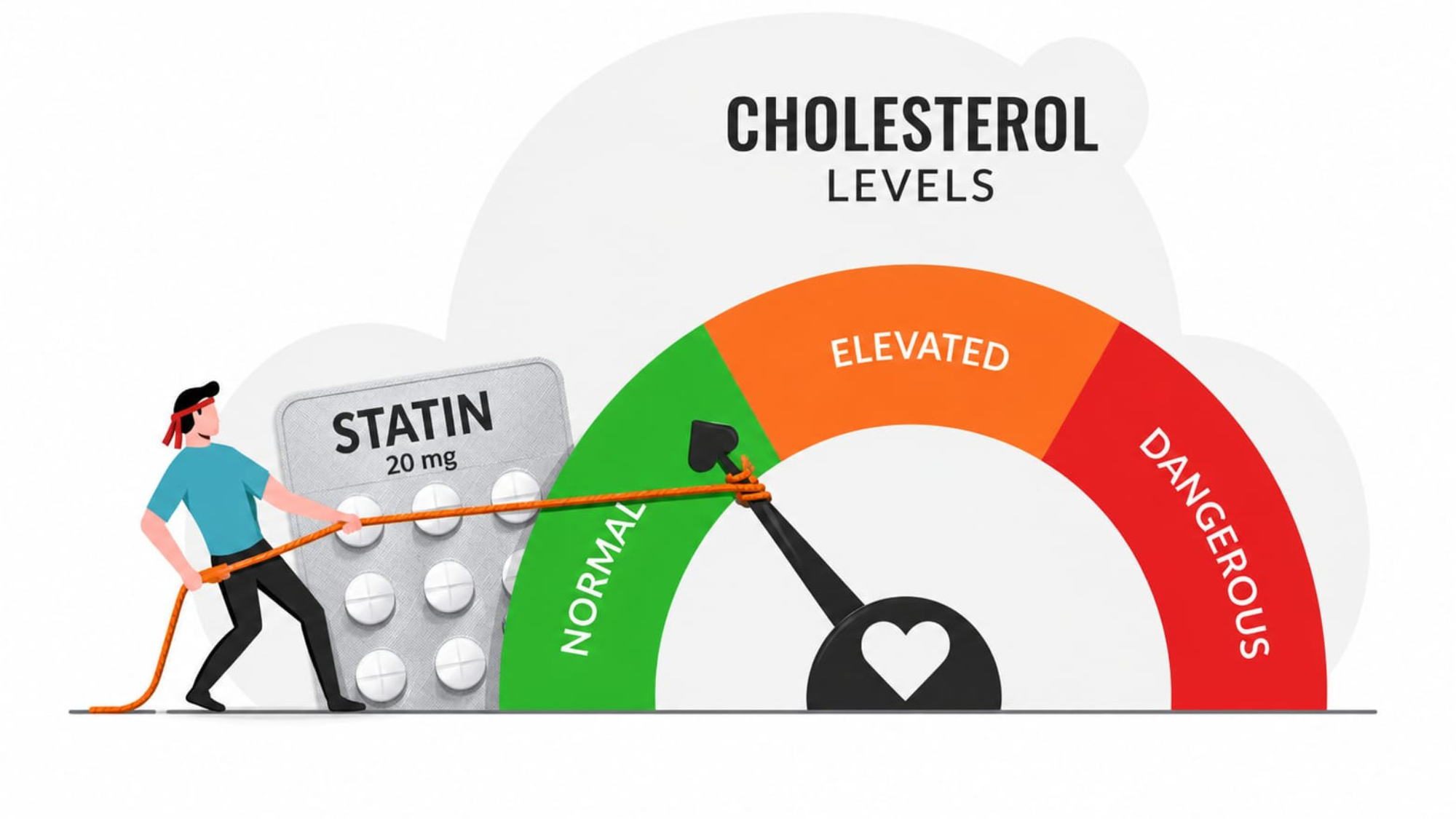
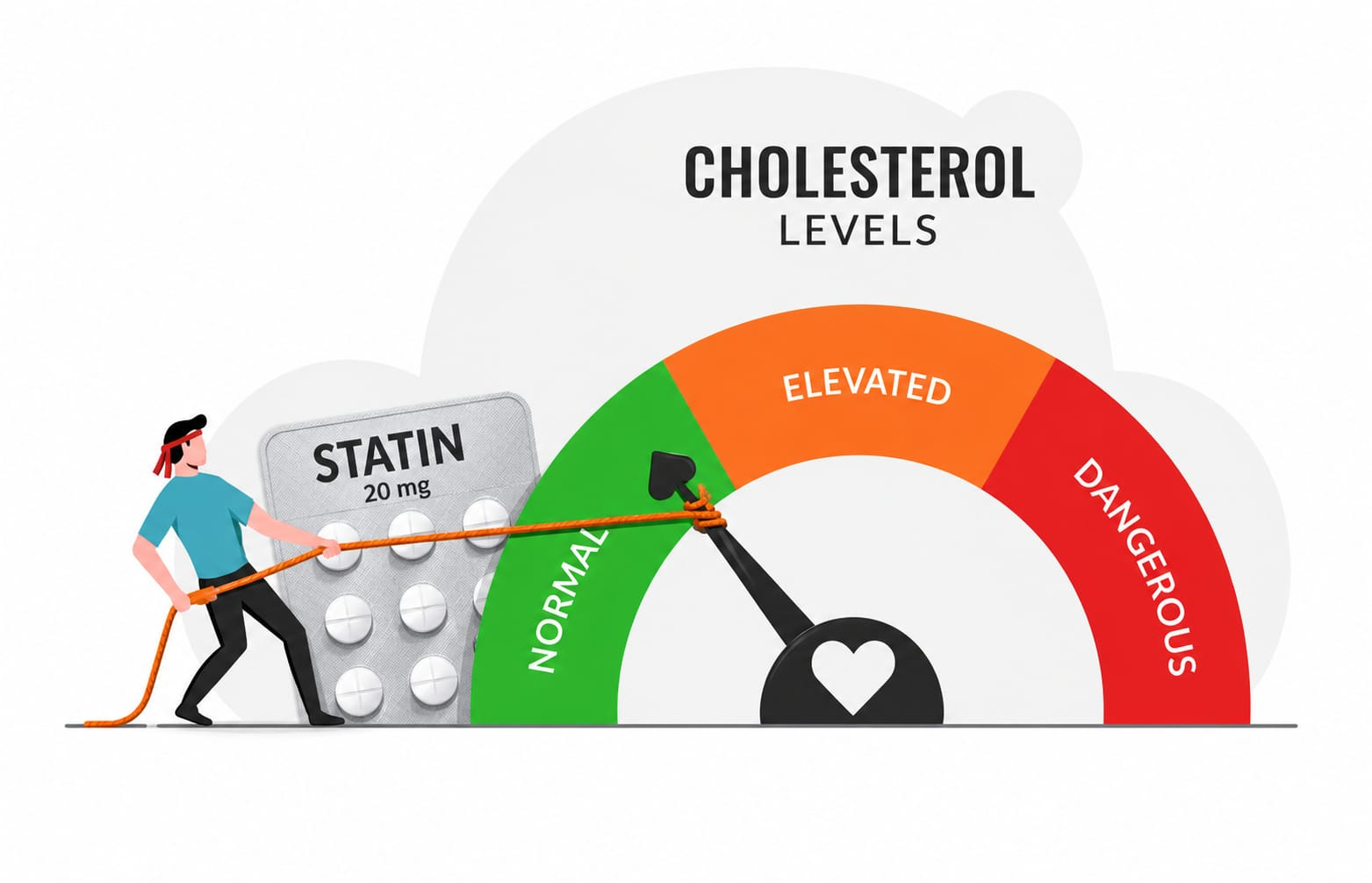
If you’ve ever seen that your cholesterol is high, you already know how the story goes. You get your bloodwork back. Your doctor circles a number in red. The conversation immediately shifts to risk, prevention, and medication.
And more often than not, the solution offered is a statin.
The message is simple:
“Your cholesterol is high.”
“High cholesterol causes heart disease.”
“Lower cholesterol, and you lower your risk.”
It sounds so obvious, right? But the problem is that the human body is not a spreadsheet. As a functional nutritionist, I have always believed that instead of focusing on one laboratory marker being haywire, we must ask why it became abnormal in the first place. So today, I’ll tell you why mainstream medicine’s favorite pill might be doing your body more harm than good, and how you can actually protect your heart without sacrificing your vitality.
The Root Cause vs. the Wrong Target
Let’s clear something up right away. If you have advanced cardiovascular disease, statins can be lifesaving. In functional medicine, they have their place and can work as a secondary treatment. But for the vast majority of people, statins are prescribed as primary prevention, meaning you have no history of heart disease, but your doctor prescribes them because your routine blood work shows total cholesterol beyond its clinical guideline.
Here is the problem: standard lipid panels only measure the weight of your LDL cholesterol, not the nature of the particles themselves. It’s like measuring how many cars are on a highway by simply weighing the entire highway without analyzing peak traffic hours and the frequency of vehicles.
Recently, shocking data was discussed on leading functional medicine expert Dr. Mark Hyman’s podcast, where cardiologist Dr. Aseem Malhotra revealed a staggering statistic: you often need to treat 50 people with a statin for many years just to prevent one single heart attack. Why? Because LDL cholesterol isn’t the primary driver of heart disease. Insulin resistance and chronic inflammation are. By focusing solely on forcing cholesterol numbers down, conventional medicine is essentially painting over the check-engine light.
What Statins Are Actually Doing to Your Body
When you block the body’s natural pathway for producing cholesterol (the HMG-CoA reductase pathway), you don’t just lower LDL. You trigger a cascade of systemic side effects that disrupt your cellular energy, your hormones, and your brain.
Here is what happens inside your biology when you take these medications:
1. Mitochondrial Poisoning & Muscle Pain
Statins inadvertently block the production of Coenzyme Q10 (CoQ10), a vital nutrient your cells’ mitochondria need to produce cellular energy (ATP). Without CoQ10, your cellular power plants begin to fail. This is why up to 20% of statin users experience debilitating muscle aches, weakness, and fatigue. Your muscles are quite literally starving for energy.
2. The Metabolic Backfire (Type 2 Diabetes)
Perhaps the most alarming side effect is the impact on your blood sugar. Studies show that statins can increase your risk of developing Type 2 diabetes by up to 50% overall, and by up to a shocking 71% in post-menopausal women. The very drug prescribed to protect your heart can induce the exact metabolic dysfunction that causes heart disease.
3. Brain Fog and Cognitive Decline
Your brain is the most cholesterol-rich organ in your body, accounting for about 20% of your body’s total cholesterol. It is crucial for building the myelin sheaths that insulate your nerves and allow brain cells to communicate. When you aggressively deplete this fat, many patients experience severe brain fog, memory gaps, and rapid cognitive decline.
4. Vitamin D & K2 Crash
Your skin actually needs cholesterol to convert sunlight into vitamin D. When you force cholesterol levels down too low, you severely reduce your vitamin D, which is the ultimate foundation for your immune system, bone health, and mood. On the other hand, statins block the proteins needed to transport vitamin K2. K2’s main job is to act like a traffic cop for calcium. It pushes calcium into your bones and teeth and keeps it out of your blood vessels. Depleting K2 can actually accelerate the hardening and calcification of your arteries.
The Functional Approach: True Cardiovascular Defense
If you want to truly protect your heart, you have to stop treating symptoms and start addressing root causes. Here is how I approach cardiovascular health in my practice.
Get the Right Testing
Stop relying on outdated lipid panels. If you want to truly protect your heart, we have to stop relying on an outdated 1970s lipid panel that only measures the weight of your cholesterol cargo. Instead, my practice focuses on advanced cardiovascular metrics that look directly at the specific proteins steering these fats through your bloodstream. This is where Apolipoprotein B (ApoB) and Apolipoprotein A1 (ApoA1) create a massive clinical difference.
Why ApoB and ApoA1 Change Everything
Standard LDL-C tests only tell us how much total cholesterol is trapped inside your LDL particles. They do not tell us how many actual particles are floating around. Think of it like this: a highway with two massive semi-trucks has the same “weight” of cargo as a highway packed bumper-to-bumper with 50 unstable, crashing motorcycles. The standard test only registers the weight, leaving you completely blind to the actual traffic danger.
Apolipoprotein B (ApoB): Every single plaque-causing particle, including LDL, VLDL, and its remnants, carries exactly one ApoB molecule on its surface. Measuring ApoB gives us a direct, absolute headcount of every dangerous, atherogenic vehicle in your blood. It completely bypasses the guesswork of standard LDL testing.
Apolipoprotein A1 (ApoA1): This is the structural protein attached to HDL, the “good” cholesterol carrier. ApoA1 acts like a garbage truck, actively clearing away excess fat from your tissues and hauling it back to the liver for recycling.
The ApoB/ApoA1 Ratio: This metric provides an ultra-precise picture of your systemic risk. A high ratio means you have far too many rogue vehicles causing damage and not enough clean-up trucks to clear the road.
Other parameters to look after:
-
Fasting serum insulin
-
hs-CRP
-
HbA1c
Fix the Food, Fix the Heart
Heart disease is a disease of inflammation, driven primarily by refined sugars, processed carbohydrates, and industrial seed oils like canola, soybean, and sunflower oil, which oxidize rapidly and cause direct damage to your arterial walls.
-
Instead, flood your body with good fats like cold-pressed extra virgin olive oil, avocados, coconuts, and raw walnuts.
-
To actively protect your blood vessels from oxidative stress, load up on vitamin C-rich foods like amla (Indian gooseberry), kiwi, citrus fruits, bell peppers, and leafy greens, which keep your arteries flexible and resilient.
Finally, incorporate a daily cup of dandelion root tea, a potent liver-cleansing herbal remedy that supports optimal bile production, helping your liver naturally process, filter, and clear excess cholesterol from your bloodstream.
Strategic Supplementation
You want to protect your heart or reverse the nutrient drain caused by a prescription? Here is the functional baseline protocol I use in my practice:
-
High-Quality Algal Omega-3 (EPA + DHA): I recommend a high-quality plant based algal oil omega supplement with DHA of 500 to 1000mg per serving. Unlike flaxseeds, chia seeds, or walnuts, algal oil provides preformed long-chain omega-3 fatty acids that the body can readily utilize. These fatty acids help support cardiovascular health by reducing triglyceride levels, modulating inflammation, improving endothelial function, and maintaining the integrity and flexibility of cell membranes.
-
CoQ10 (or Ubiquinol): Absolutely non-negotiable and essential. This directly replaces what the drug depletes, keeping your cellular power plants firing and protecting you from severe muscle fatigue.
-
Vitamins D3 & K2: Vital for metabolic health and preventing arterial calcification. You must keep checking your levels once every 6 months via a reliable blood test and consult your functional nutritionist to adapt your precise therapeutic dosages over time.
-
Zinc (15–30 mg daily): Essential to replace the mineral reserves directly drained by statins. It acts as a vital antioxidant that protects the delicate lining of your blood vessels and accelerates cellular repair across inflamed endothelial tissues.
Supplementation purely depends on the individual’s parameters and should be taken under professional guidance.
The Bottom Line
My only purpose in writing this article today was to ignite a conversation and break the dangerous assumption that prescription medication is the only or ultimate cure for heart health. In our hyper-fast world, most people have been conditioned to think, “Oh, my cholesterol was high, but I took the pill, so I’m completely safe and good to go.”
I want you to look deeper at your lifestyle, your energy, and your actual metabolic health. Medications have their place in crisis management, but a lifetime pill should never replace a deep commitment to root-cause vitality. Let’s start treating the whole body, not just the blood work.
Let’s chat in the comments below or book a root-cause discovery call with me to map out a personalized strategy for your metabolic and cardiovascular health.