
One of the biggest lessons thyroid health has taught me is that symptoms don’t always read the lab report. Time and again, I’ve met individuals who were reassured that everything looked “normal” because their TSH fell within the reference range, yet they were battling relentless fatigue, unexplained hair fall, brain fog, constipation, and a metabolism that seemed to have slowed to a crawl.
When someone walks into my clinic searching for these answers after being told, “Everything looks fine,” I see someone who’s confused, vulnerable, looking for support and simply wants to feel like themselves again. When someone places that trust in me, I believe it comes with a responsibility to give them the best care I can, look beyond a single laboratory value, ask better questions, and understand what their body is trying to communicate rather than dismissing their symptoms.
This trust pushed me to dig deeper into thyroid physiology. The more I learned, the more I realized that relying on TSH alone often tells only one part of a much larger story. If you truly want to understand thyroid health, you have to look beyond a single marker, connect to the different pieces like your symptoms, hormone levels, conversion, immune activity, and overall physiology, to understand why your thyroid may not be functioning optimally.
Conventional medicine often treats TSH (Thyroid Stimulating Hormone) as the primary marker for assessing thyroid health, and in many cases, treatment decisions, including whether to start or adjust thyroid hormone replacement such as thyroxine are guided largely by this value alongside the overall clinical picture. So today, I want to pull back the curtain on what the research tells us about the limitations of relying on TSH alone for understanding everyday energy, metabolism, and thyroid function & the additional markers that can help complete the picture.
What TSH Actually Is ?
TSH, or Thyroid Stimulating Hormone, is a signaling hormone produced by the pituitary gland, located at the base of your brain. Its primary role is to regulate how much thyroid hormone your thyroid gland should produce at any given moment.
This entire process is controlled by the Hypothalamic-Pituitary-Thyroid (HPT) axis. It begins in the hypothalamus, a part of the brain that constantly monitors your body’s energy demands. When it senses that circulating thyroid hormone levels are falling, it releases TRH (Thyrotropin-Releasing Hormone), which travels to the pituitary gland. In response, the pituitary releases TSH into the bloodstream. TSH then travels to the thyroid gland, where it binds to receptors on thyroid cells and stimulates the production and release of the inactive thyroid hormone T4 (thyroxine) and small amounts of the active form T3 (Triiodothyronine). Then T4 gets converted to T3. As thyroid hormone levels rise, they signal back to the brain to reduce TRH and TSH production. This continuous feedback loop helps maintain thyroid hormone balance.
Because TSH is the bridge between the pituitary gland and the thyroid gland, conventional medicine uses it as the primary screening marker for thyroid dysfunction. Laboratory reference ranges generally consider values between approximately 0.4 and 4.5 mIU/L to be normal. But functional medicine, however, aim for a narrower range of around 0.5–2.0 mIU/L in symptomatic individuals, as this range reflects optimal thyroid physiology
The Mismanagement Flaw
Let’s take this one step further because this is where things get really interesting.
This is what I often refer to as a cellular mismatch.
Once your thyroid gland releases T4, it still needs to be converted into its active form, T3, before your cells can actually use it to produce energy, regulate metabolism, maintain body temperature, support healthy hair growth, and keep your brain functioning optimally.
Here’s where the limitation of TSH begins.
The brain has a remarkable ability to preserve its own supply of active thyroid hormone, even during periods of chronic stress or illness. As a result, it may continue signaling that everything is functioning normally, keeping your TSH within the reference range.
The rest of the body, however, doesn’t always have the same advantage.
Organs such as the liver, gut, muscles, and other tissues are far more sensitive to factors like chronic stress, inflammation, poor gut health, prolonged calorie restriction, illness, and deficiencies of nutrients such as selenium, zinc, and iron. These factors can reduce the conversion of T4 into active T3, leaving your cells with less hormone than they need to function optimally.
This means your brain may believe thyroid hormone levels are adequate while the rest of your body continues to experience symptoms like fatigue, brain fog, constipation, hair fall, poor exercise recovery, and a sluggish metabolism.
Some researchers have also proposed that inherited genetic variations may further reduce the body’s ability to convert T4 into active T3. This could help explain why a small group of people continue to experience persistent thyroid symptoms despite having “normal” blood tests and receiving standard T4 treatment. Although this remains an area of ongoing research, it reinforces an important message: a normal TSH doesn’t always reflect how well thyroid hormone is functioning at the cellular level.
The 3 Blind Spots of the TSH Test
This brings us to one of the biggest limitations of relying on TSH alone. While TSH is an important screening tool, it has three significant blind spots that can sometimes leave people searching for answers despite being told their thyroid is “normal.”
The first blind spot is thyroid hormone conversion. Your thyroid gland mainly produces T4, it first has to be converted into its active form, Free T3. This conversion takes place primarily in the liver, gut, kidneys, but factors such as chronic stress, inflammation, poor gut health, illness, and deficiencies of nutrients like selenium, zinc, and iron can reduce this conversion. The result? Your TSH may look perfectly normal because your brain believes enough hormone is available, while your cells may still be receiving less active thyroid hormone than they need.
The second blind spot is what happens during prolonged physiological stress. When your body perceives that it’s under stress whether from illness, chronic inflammation, inadequate calorie intake, sedentary lifestyle, consumption of Inflammatory foods or seed oils or ongoing emotional stress it sometimes shifts thyroid hormone metabolism away from producing active T3 and instead produces more Reverse T3. Think of Reverse T3 as the body’s way of applying the brakes. Rather than encouraging your cells to burn energy, it reflects an adaptive response aimed at conserving energy during challenging conditions. This is one reason why some people continue to feel fatigued and metabolically sluggish even though their TSH remains within the reference range.
Lastly, the autoimmunity. The most common cause of hypothyroidism is Hashimoto’s thyroiditis, an autoimmune condition in which the immune system gradually attacks the thyroid gland. What’s remarkable is that thyroid antibodies particularly TPO and thyroglobulin antibodies can become elevated years before thyroid hormone levels or TSH begin to change. During that time, many individuals experience symptoms such as fatigue, brain fog, hair fall, joint aches, or unexplained weight changes while routine thyroid screening continues to appear “normal.” Looking for thyroid antibodies allows us to identify this autoimmune process much earlier and understand whether the immune system, rather than the thyroid gland alone, is contributing to the bigger picture.
It makes me wonder, if so many factors can influence how thyroid hormones are produced, converted, and utilized & autoimmune activity can exist long before TSH changes then why are so many people assessed primarily through a single TSH value and prescribed Levothyroxine?
What a Real, Complete Thyroid Panel Looks Like
Hence, I almost always recommend a comprehensive thyroid panel rather than relying on TSH alone. It helps me identify whether the issue lies in hormone production, hormone conversion, or an underlying autoimmune process instead of simply guessing. More importantly, it allows me to explain exactly why I’m recommending certain dietary changes, supplements, or lifestyle modifications. I believe that understanding the “why” behind a treatment plan builds trust, improves adherence, and empowers people to take an active role in their own healing.
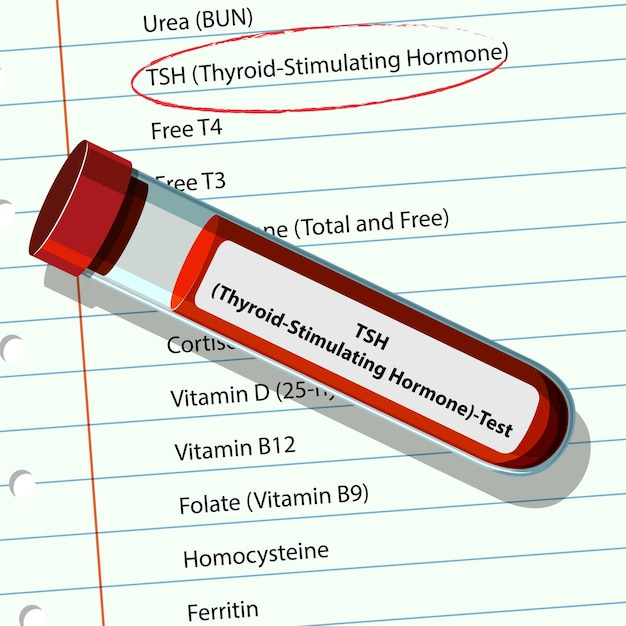
TSH (Thyroid Stimulating Hormone)
TSH tells me how strongly the pituitary gland is signaling the thyroid to produce more hormone. It’s an important starting point, but it doesn’t tell me how much hormone is actually reaching your cells or whether it’s being converted into its active form.
Free T4
Free T4 is the storage form of thyroid hormone released by your thyroid gland. Think of it as the raw material. Having enough Free T4 is important, but it still needs to be converted into active T3 before your body can actually use it.
Free T3
Free T3 is the biologically active thyroid hormone. It influences energy production, metabolism, body temperature, mood, digestion, exercise recovery, and healthy hair growth. Low Free T3 can often explain why someone continues to experience classic thyroid symptoms despite having a “normal” TSH.
Total T3
Similarly, Total T3 reflects both free and protein-bound T3 circulating in the blood. In certain clinical situations, it can provide additional insight into thyroid hormone status and help complete the overall picture when interpreted alongside Free T3 and the rest of the thyroid panel.
Total T4
While Free T4 measures the hormone available for immediate use, Total T4 measures both the free hormone and the portion bound to transport proteins in the bloodstream. Looking at both values together can provide a better understanding of overall thyroid hormone production and transport.
Reverse T3
Reverse T3 isn’t part of every thyroid work-up, but in the right clinical context it can provide another important piece of the puzzle. During chronic stress, illness, inflammation, prolonged calorie restriction, or inadequate nutrition, the body may convert more T4 into Reverse T3 instead of active T3 as a way of conserving energy.
TPO & Thyroglobulin (TG) Antibodies
These markers help identify Hashimoto’s thyroiditis, the most common cause of hypothyroidism. Thyroid antibodies can become elevated years before TSH changes, allowing us to detect autoimmune activity much earlier and intervene before significant thyroid damage occurs.
No single blood marker can tell the complete story. Every parameter answers a different question. It’s only when we interpret them together alongside your symptoms, medical history, lifestyle, and nutritional status that we begin to understand how your thyroid is truly functioning.
The Bottomline
The goal of this article isn’t to convince you that TSH is an unimportant test. It isn’t.
But to make you understand that thyroid physiology is far more complex than a single laboratory value. Your thyroid isn’t an isolated organ, it’s part of an intricate network involving your brain, liver, gut, immune system, nutritional status, and every single cell that depends on thyroid hormones to produce energy.
That’s why I believe your symptoms deserve as much attention as your blood reports.
If you’re constantly being told that your thyroid is “normal” despite experiencing fatigue, hair fall, constipation, brain fog, difficulty losing weight, or feeling unlike yourself, don’t ignore what your body is trying to tell you. Sometimes, the missing answers aren’t found in a single number; they’re found by putting all the pieces of the puzzle together.
Let’s chat in the comments below, or book a root-cause discovery call with me to map out a personalized strategy as per your health goals