
A decade ago, the word “inflammation” was rarely heard outside of a doctor’s clinic, usually when someone had a swollen ankle or a severe injury. Today, it’s everywhere on social media, termed as the hidden culprit behind everything from stubborn joint pain and brain fog to thyroid imbalances and PCOS.
But even though we hear this word so often, many of us still don’t understand what inflammation actually means or how it affects our health.
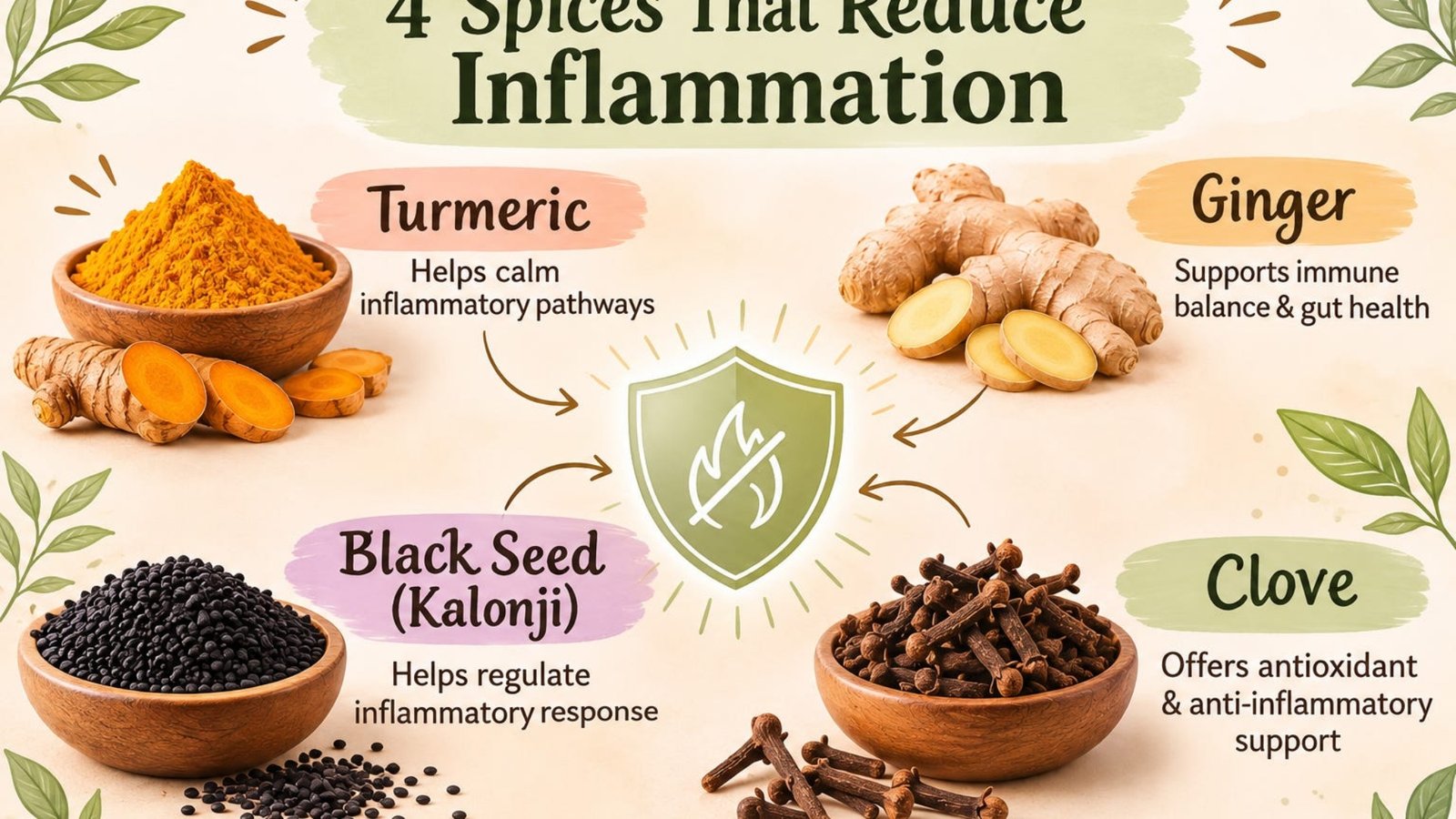
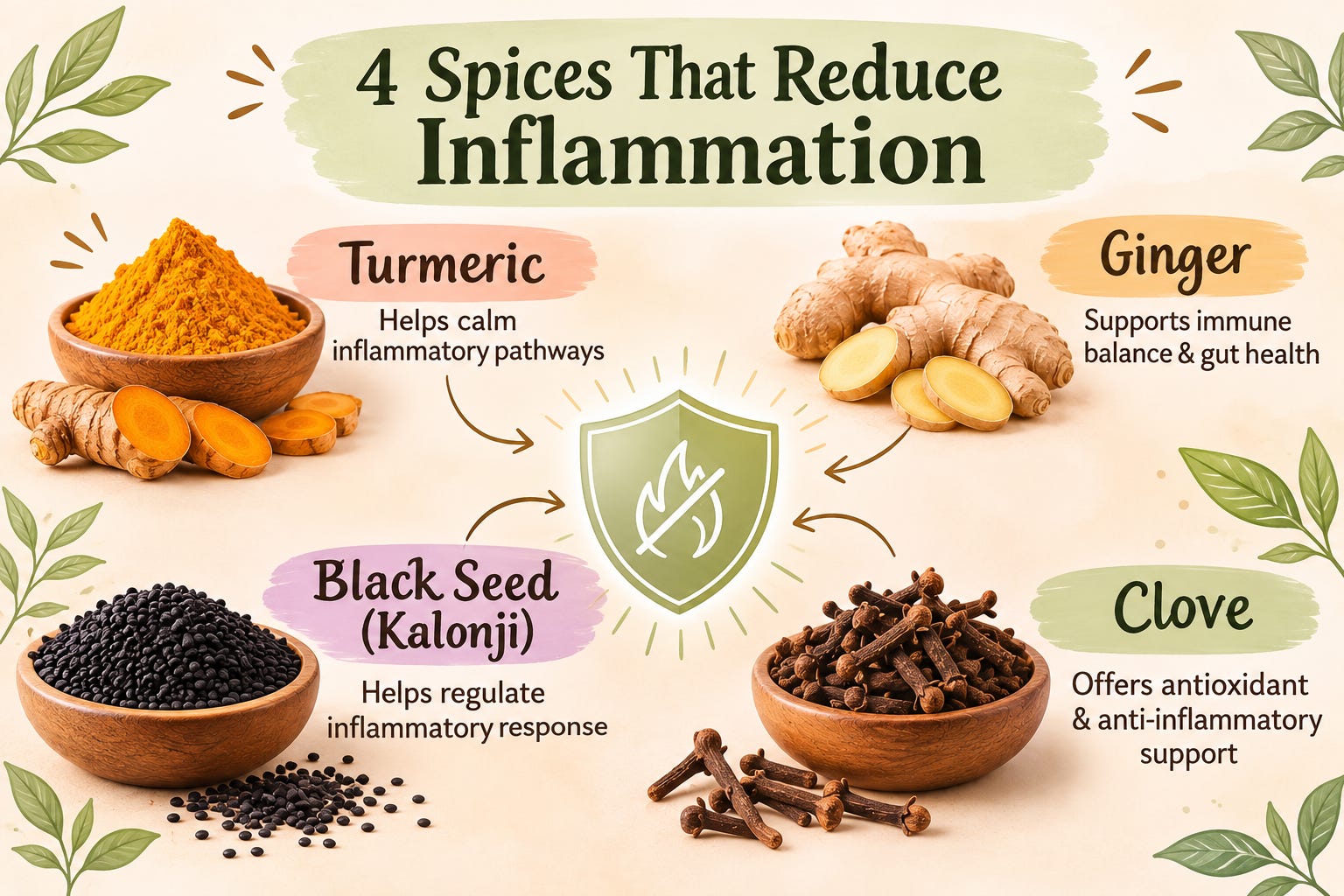
So today, I’m going to explain exactly what inflammation means, the signs and symptoms to look out for, and four powerful herbs sitting right in your kitchen that you can start using in your daily routine to help fight inflammation.
What is Inflammation?
Your immune system is a highly intelligent defense force whose intention is to only protect you. The moment you see a threat, like a dangerous animal, your reflex action is to run. Similarly, if your body senses a breach, whether it’s a virus, bacteria, or fungus, a flu, or accidentally hitting your finger with a knife, your immune system’s reflex action is to immediately send little soldiers named white blood cells (WBCs) and cytokines in your bloodstream. These soldiers rush to the front lines to fight off the pathogens, repair the damage, and free you from the infection/ fever/ seasonal flu. This instant response is important. Inflammation is not inherently bad; it’s actually an important part of our immune system that fights off viruses, bacteria, and keeps you alive and well.
This protective response operates in two distinct ways: acute and chronic inflammation. Acute inflammation occurs when these white blood cells and cytokines are released into the blood for a very short period of time to complete a specific rescue mission and then promptly return to their stations. You experience this temporary reflex every time you slice a finger, run a fever to burn off the seasonal flu, get a cough, experience a passing itch, or even when your eyelids blink and you sneeze to expel dust. It is a rapid, localized deployment that fixes the problem and shuts down as soon as the danger passes.
The problem begins when this temporary safety measure turns into chronic inflammation. In this state, your white blood cells and cytokines are constantly released into your blood every single day, every single time, just to keep protecting you. Because the immune system is constantly sensing a perceived threat, whether from high stress levels, caffeine consumption, environmental toxins, or poorly digested food particles, it never gets the signal to switch off
Over time, this constant trigger creates massive pressure on your immune system, eventually your poor immune team gets completely exhausted and just gives up the control on the release of cytokines, these cytokines starts hampering all the normal processes of the body
4 Herbs to Reduce Inflammation
Fortunately, your kitchen cabinet holds some of the most potent, scientifically validated tools to do exactly that. Rather than relying on synthetic drugs that simply mask these symptoms while taxing your liver, functional medicine looks to ancestral, bio-active spices that talk directly to your cellular pathways. By incorporating specific anti-inflammatory botanicals into your daily routine, you can safely signal your white blood cells to stand down and give your immune system the space it needs to heal. Here are the top four powerhouse ingredients that can systematically disarm chronic inflammation from the root.
1. TURMERIC: Your Kitchen’s Natural Inflammation Fighter
That bright yellow turmeric powder sitting in your kitchen contains a powerful natural compound called curcumin.
Here’s why it’s interesting.
Your body has an internal defense system that sends out messages whenever it senses danger. These messages tell your immune system to respond by creating inflammation. This is helpful when you’re fighting an infection or healing an injury. But when your body keeps sending out these messages even when there is no immediate danger, inflammation can continue unnecessarily. Curcumin helps regulate some of these internal messages, preventing your body’s inflammatory response from becoming unnecessarily excessive. This is why turmeric has been widely studied for its potential to support joint health, reduce inflammatory activity and protect cells from damage.
But there’s more!
Curcumin is also being studied for its potential brain health benefits. It may help protect brain cells and support a protein that helps your brain form new connections. This protein plays an important role in memory, learning and keeping your brain functioning well.
How to consume it:
Take half a teaspoon of turmeric and add it to lukewarm water. Add a pinch of black pepper and a teaspoon of extra virgin olive oil or cold-pressed coconut oil. Why black pepper? Because it helps your body absorb curcumin better. You can also add turmeric to your dals, curries, soups and everyday meals.
2. GINGER: More Than Just a Remedy for Bloating
Most of us use ginger when we have an upset stomach, nausea or bloating. But ginger has another interesting benefit. It may help regulate your body’s inflammatory response. Ginger contains natural compounds called gingerols and shogaols, which have been studied for their anti-inflammatory properties.
Here’s something fascinating. Your body has special defense cells that rush to fight infections whenever harmful bacteria or viruses enter your system. Think of them as your body’s security guards; to trap and destroy unwanted invaders, these cells sometimes release tiny net-like structures. These nets help catch harmful organisms before they spread. But when these defense cells become overactive, they can release too many of these nets, potentially contributing to inflammation and other health problems. Interestingly, ginger may help prevent these cells from becoming excessively active.
A 2023 study published in the journal JCI Insight found that ginger supplementation helped reduce this excessive immune activity in participants. This is one of the reasons ginger is gaining attention for its potential role in supporting a balanced immune response. And of course, we cannot forget its digestive benefits. Ginger has traditionally been used to support digestion, ease nausea and help food move through the digestive tract comfortably.
How to consume it:
Take half an inch of fresh ginger, crush or slice it, and boil it in a cup of water for 5 to 7 minutes. You can drink it as ginger tea or add fresh ginger to your soups, curries, stir-fries and juices.
3. KALONJI (BLACK SEED): Your Cells’ Natural Protection Partner
Those tiny black seeds that we often sprinkle over breads and Indian dishes are much more powerful than they look! Kalonji, also known as black seed, contains a special natural compound called thymoquinone.
To understand why this is important, let’s talk about something that happens inside your body every single day. Your body constantly produces tiny unstable particles called free radicals. These are produced naturally when your body creates energy, fights infections and carries out its everyday functions.
Think of them as tiny troublemakers. In small amounts, they are completely normal. But when too many of them build up, they can start damaging healthy cells. Imagine rust slowly damaging the metal parts of a machine. Something similar happens when excessive free radicals damage the protective structures inside your cells.
Over time, this damage can affect how efficiently your cells produce energy and protect themselves. This is where kalonji becomes interesting. Its active compound, thymoquinone, has antioxidant properties. In simple words, it helps protect your cells against damage caused by excessive free radicals. But what’s even more interesting is that it may also encourage your body to produce more of its own protective substances. One of these is called glutathione. Think of glutathione as your body’s internal cleaning and protection team. It helps protect your cells, supports their normal functioning and keeps oxidative damage under control.
So, kalonji doesn’t just provide antioxidant support. It may also help strengthen your body’s own natural defense system.
How to consume it:
You can add a small amount of freshly ground kalonji to your meals, sprinkle it over salads or use it in your everyday cooking. You can also use good-quality cold-pressed black seed oil starting from 1/4th to ½ tsp preferably post meal
4. CLOVE: A Tiny Spice With Big Benefits
Have you ever wondered why cloves are traditionally used for toothaches?
It’s because cloves contain a natural compound called eugenol, which has been studied for its pain-relieving, antioxidant and anti-inflammatory properties. But their potential benefits go beyond oral health.
Let’s talk about allergies. Your body has special defense cells that act like security guards. They are present in your skin, gut and respiratory system. When these cells encounter something, they consider a threat, such as an allergen, they release a chemical called histamine. Histamine is responsible for many of the symptoms we associate with allergies.
For example, it can make the tiny blood vessels in your body more permeable, allowing fluid to move into surrounding tissues.
This is why you may experience symptoms such as:
-
Frequent sneezing.
-
Runny nose and sinus congestion.
-
Itchy skin and redness.
-
Swelling and hives.
Cloves contain eugenol, which has shown the potential to influence some of the processes involved in inflammation. They have also been studied for their ability to fight certain harmful bacteria, particularly those found in the mouth. Their antioxidant properties may offer additional protection against cellular damage.
So, while cloves are no substitute for allergy treatment, they are an interesting spice to include as part of a varied, balanced diet.
How to consume it:
Take two whole cloves and add them to a cup of water. Cover and simmer gently for 5 to 7 minutes. Allow it to steep before drinking. You can enjoy this warm clove infusion after a meal.
The Bottomline
At the end of the day, chronic inflammation isn’t just a random problem in your body. It’s asking for a little more care, a little extra love, and a better understanding of what it needs.
While these spices are incredible tools, they’re only one part of the puzzle. True, lasting healing needs a holistic approach. One that involves stepping out of survival mode, and building a plan that’s tailored to your body and its unique needs.
If you’re experiencing this exhausting cycle of symptoms and want to understand how to include these powerful foods in your daily routine, let’s work together to find the answers. Book a Root-Cause Discovery Call with me to understand the bigger picture and what your body may actually be asking for.
Leave Your Comment
You must be logged in to post a comment