
Some people often talk about IBS as a digestive disorder. Yet, some of the strongest predictors of symptom severity aren’t found in my clients’ food diaries. They’re found in sleep patterns, stress levels, emotional health, workload, and the capacity to recover from daily demands. It means the gut and the nervous system are far more interconnected than most people realize.
IBS Is More Than What You Eat
Before we dive in deep, let’s quickly understand what IBS actually is.
IBS, or Irritable Bowel Syndrome, is a functional gastrointestinal disorder characterized by symptoms such as bloating, abdominal pain, constipation, diarrhea, or a combination of both.
It can present as:
-
IBS-C (constipation predominant)
-
IBS-D (diarrhea predominant)
-
IBS-M (mixed type)
While these categories help us understand symptom patterns, they don’t explain why those symptoms occur. And that’s where the gut-brain connection becomes important.
Your Gut Is Constantly Listening to Your Brain
One of the most fascinating things about digestion is that it doesn’t actually begin in your stomach; it begins in your brain.
Think about it. The moment you see food, smell something delicious, start preparing a meal, or even think about what you’re going to eat, your body is already getting to work. Signals are sent through the nervous system, preparing your digestive tract to receive, break down, and absorb that food. This happens because your gut and brain are in constant communication through what we call the gut-brain axis, a complex network involving the vagus nerve, hormones, immune signals, the gut microbiome, and even the nervous system embedded within your digestive tract. In simpler terms, your brain is constantly talking to your gut, and your gut is constantly talking back. This is exactly why digestion isn’t influenced only by what you eat. It’s also influenced by how you feel.
Have you ever noticed butterflies in your stomach before a big event? Or felt nauseous when you were anxious?
Maybe you’ve had an urgent trip to the bathroom before an important presentation.
That’s the gut-brain axis in action.
What happens in your mind doesn’t stay in your mind. Your gut hears it too.
Why Stress Can Trigger IBS Symptoms
One analogy I often use with clients is this:
Imagine a tiger standing right in front of you. At that moment, your body isn’t thinking about digesting breakfast or absorbing nutrients. It’s thinking about one thing: survival. Your heart starts beating faster. Stress hormones are released. Blood flow is redirected towards your muscles so you can fight or run. Every system in your body shifts its focus toward keeping you safe. Now, your body responds in a surprisingly similar way whether the threat is a tiger, a difficult conversation, a mounting workload, financial stress, or a never-ending to-do list. Of course, your logical brain knows the difference. But your nervous system responds to both by activating the same stress pathways, a response commonly known as fight or flight.
In stressful situations, clients often report:
-
Increased bloating
-
Abdominal discomfort
-
Constipation or diarrhea
-
Food reactions
-
Changes in appetite
Not because their gut is failing them, but because their body is doing exactly what it was designed to do: prioritize survival over digestion.
One of the more fascinating areas of research is the relationship between stress and intestinal permeability. You can think of the intestinal lining as a highly selective barrier. Its job is to absorb nutrients while preventing unwanted substances from entering circulation. Chronic stress may weaken this barrier through hormonal and inflammatory pathways. At the same time, stress can also influence the gut microbiome. In fact, some studies suggest that psychological stress may reduce microbial diversity and alter the balance of beneficial bacteria.
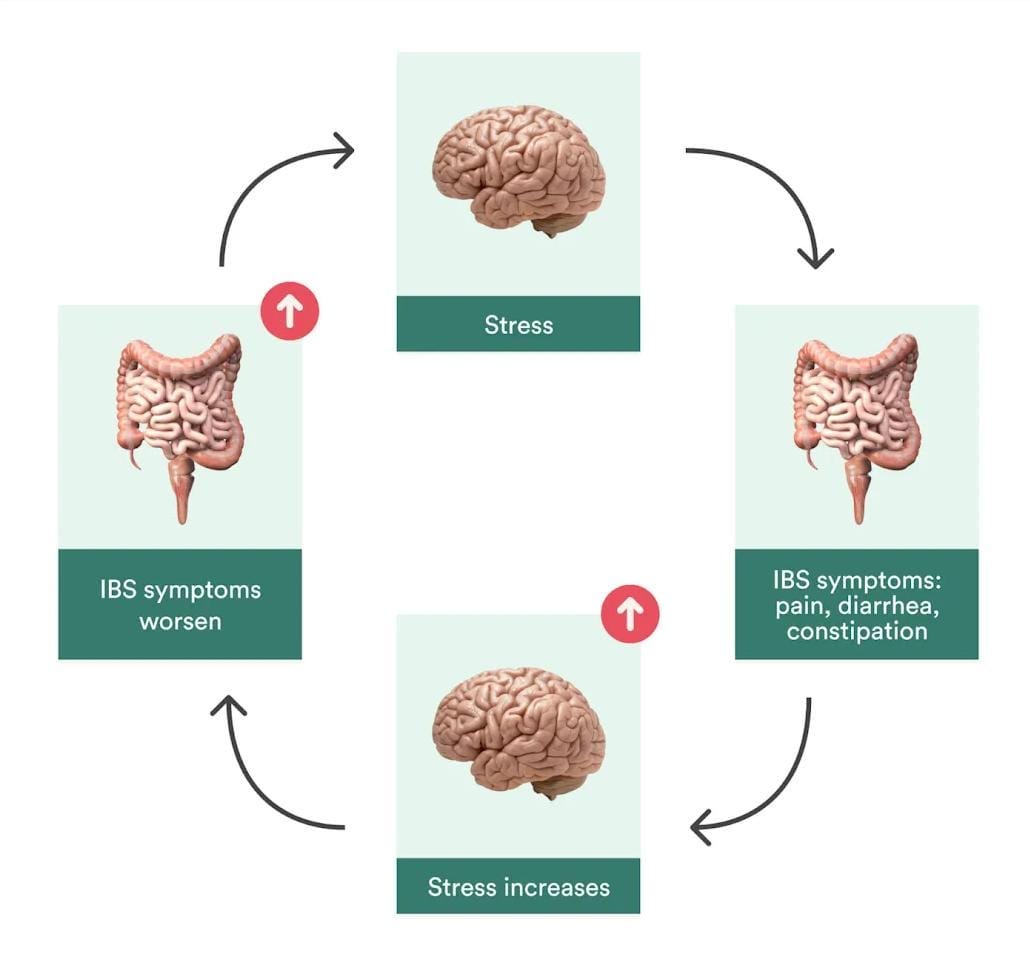
This creates a cycle: stress affects the gut. The gut becomes more symptomatic. Symptoms create more stress. And the cycle continues.
The Cortisol Connection
One of the primary hormones involved in the stress response is cortisol. Before you villainize cortisol, let’s be clear: it is not bad. In fact, we need it. The problem arises when cortisol remains elevated for extended periods. In clinical practice, I often find that clients dealing with chronic stress also struggle with poor sleep, irregular blood sugar spikes, increased inflammation, fatigue, and digestive symptoms that seem to have no obvious food trigger.
Over time, chronic stress can influence gut motility, impair the intestinal lining, and alter the environment in which digestion takes place.
One obvious question comes to mind:
Why do some people experience constipation while others develop diarrhea?
In some individuals, stress slows gut motility, allowing stool to remain in the colon for longer periods and contributing to constipation. In others, stress accelerates motility, leading to urgency and diarrhea. This helps explain why two people can eat the same meal, experience similar stress levels, and yet have completely different IBS symptoms.
A 2022 systematic review examined 37 case-control studies comparing individuals with IBS to healthy controls. Researchers exposed participants to acute psychological stressors and evaluated changes in gastrointestinal symptoms, gut motility, autonomic nervous system activity, stress hormone responses, and brain activity. They found that mental stress consistently increased gastrointestinal symptoms and altered gut function in people with IBS. In other words, stress wasn’t simply making people feel worse emotionally; it was measurably changing how the digestive system behaved.
Researchers have also observed that stress can amplify visceral hypersensitivity, one of the hallmark features of IBS. This means the brain and gut become more reactive to normal digestive sensations, contributing to abdominal pain and discomfort even in the absence of structural disease.
Why Food Still Matters
At this point, I want to be very clear: before you assume, “Oh, it’s a stress-related condition, so I can eat everything,” stop right there! Because the gut still needs the right environment, nutrients, and building blocks to repair and function optimally. This is where a targeted nutrition strategy becomes important. The nervous system cannot function optimally without the raw materials required to produce neurotransmitters. The microbiome cannot thrive without proper nourishment.
Here, my goal is to reduce the burden on the gut while supporting repair.
1. Remove Common Trigger Foods
In the initial phase, I often recommend temporarily removing foods that commonly contribute to inflammation, immune activation, or digestive distress. These may include:
-
Gluten
-
Dairy
-
Corn
-
Soy
-
Eggs
-
Peanuts
The goal isn’t restriction forever. The goal is to create a calmer environment, so the gut has an opportunity to heal.
2. Focus on Gut-Healing Foods
During this phase, I encourage foods that are generally easier to digest and supportive of gut repair, such as:
-
Well-cooked vegetables – Raw veggies have high fiber content that can irritate the gut lining, often worsening the symptoms. Stir-fried, boiled, or steamed vegetables like carrots, beans, mushrooms, potatoes, and sweet potatoes, etc.
-
Homemade broths like okra water, dal or rice water, and gond katira water.
-
Stews and soups like pumpkin soup and bottle gourd soup.
-
Easily digestible protein sources like tofu, edamame, tempeh, chia seeds, quinoa, and hemp hearts.
Many clients find that cooked foods are far better tolerated than raw salads when symptoms are active.
3. Consider Targeted Nutrients
Depending on the individual, I may consider nutrients that support gut lining integrity and nervous system health, including:
-
L-glutamine
-
Zinc
-
Omega-3 fatty acids
-
Vitamin D
-
B vitamins
Of course, supplementation should always be personalized rather than taken blindly.
Don’t Forget the Nervous System
Nutrition is only one side of the equation. If the body continues to perceive danger, digestion may continue to suffer. This is why I often encourage simple practices that help shift the body out of survival mode and into a more parasympathetic, “rest-and-digest” state. Some of my favorites include:
Grounding
Spending time barefoot on natural surfaces can be a simple way to slow down and reconnect with the present moment.
How to do it: Walk barefoot for 10–20 minutes daily. Prefer natural surfaces over concrete or tiles. Morning or evening is usually most comfortable. Many people find that spending time in nature helps them feel calmer, more present, and less stressed. When stress levels reduce, the nervous system shifts away from “fight-or-flight” mode, which can indirectly support digestion, sleep, and overall well-being.
Box Breathing Before Meals
A few rounds of slow breathing before eating can help signal safety to the nervous system and prepare the digestive tract for food.
How to do it: Before each meal, inhale through the nose for 4 seconds, hold for 4 seconds, exhale slowly for 4 seconds, then hold again for 4 seconds. Repeat for 4–6 rounds. This activates the parasympathetic (”rest-and-digest”) nervous system, signaling to the body that it is safe to eat and digest food efficiently. Many people notice improved meal awareness and reduced bloating when they slow down before eating.
Yoga
Gentle movement, particularly yoga, can support both stress regulation and digestive function. None of these practices are meant to replace nutrition. They’re simply another way of reminding the body that it’s safe enough to heal.
Practice for 20–30 minutes daily, or at least 3–5 times per week.
Gentle styles such as restorative yoga, Hatha yoga, or beginner-level flows are ideal.
The Bottom Line
If you’ve been struggling with IBS, I want you to remember this:
Your symptoms are not always a sign that you’re eating the wrong foods. Sometimes they’re a sign that your body no longer feels safe enough to prioritize digestion. Your food, gut microbiome, stress, everything matters.
But lasting recovery often requires us to look beyond the plate and explore the environment in which digestion is occurring. Because sometimes the missing piece in IBS recovery isn’t another food restriction. It’s helping the nervous system shift out of survival mode and back into a state where healing can finally occur.
Let’s chat in the comments below or book a root-cause discovery call with me to map out a personalized strategy for your metabolic and cardiovascular health.